





Business process outsourcing (BPO)
Business process outsourcing (BPO) involves the contracting of non-primary business activities and functions to a third-party service provider. Typical BPO services include internal business functions such as the handling of payroll, human resources, and accounting; and customer-related services such as customer interfacing.
BPO can be referred to by different terms related to the specific nature of the outsourcing. Common terms include: information technology enabled services (ITES) for IT-based processes, knowledge process outsourcing (KPO), legal process outsourcing (LPO), engineering process outsourcing (EPO).
In the construction industry, companies can use BPO for various activities, including:
- IT services.
- CAD and BIM.
- Human resources and administration.
- Finance and accounting.
- Security.
- Facilities management.
- Project management.
- Structural design.
- Document management.
- Marketing and communications.
- Concept design.
- Detail engineering.
- Energy modelling and audits.
- Landscape design.
The primary advantage of BPO is the added flexibility that it offers a company. Since most BPO providers offer services on fee-for-service bases, a company can transform fixed into variable costs. By doing so, a company can be more flexible in responding to changes due to required capacity and workload, and therefore don’t need to invest in particular assets. By being relieved of certain activities, a company is able to focus on its core competencies, forward planning, and enhance value chain engagement.
However, there are some risks attached to BPO which can include an over-dependence on service providers, underestimated running costs, and the danger of data privacy breaches.
[edit] Related articles on Designing Buildings
- BS EN 15221.
- Business administration.
- Business model.
- Complex outsourcing.
- Construction organisation design.
- Construction organisations and strategy.
- Corporate finance.
- Critical service contracts.
- Critical suppliers.
- Funding options.
- Hard facilities management.
- Human resource management in construction.
- Insourcing.
- Joint venture.
- Outsourcing playbook.
- Partnering.
- Public sector dependent suppliers.
- Site administrator.
- Soft facilities management.
- Sourcing playbook.
- Subcontractor.
- TUPE considerations and bidding.
- Types of construction organisation.
- Vendor Managed Inventory VMI.
- Vested outsourcing.
- Working with landscape maintenance contractors.
Featured articles
Check out some of the best features and news from Designing Buildings as well as key stories from around the web.

Accommodating the Victorian and Edwardian working woman. Book review.
Rethinking passive fire protection in design

PFP demands the same level of design rigour as structure or services.

38% of Gen Zs feel safe when a fire door is wedged open.
Stunning images from around the world

Shortlist for CIOB’s Art of Building photography competition.

Guidance for conversion of traditional pre-1919 stone buildings.
Industrial heritage in the Ruhr
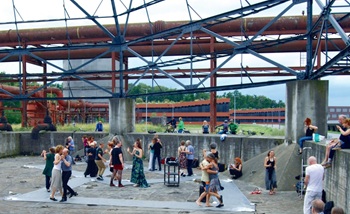
A marked difference to the fate of industrial landscapes in the UK.

Communities will be able to build their own clean energy.
Why diversity and inclusion matters for SMEs

CIOB’s D&I Charter shows how practical changes can support long-term growth.
Cut electricity bills to power growth

Coalition sends joint letter to the Chancellor.

Gasholders: a history in pictures. Book review.
Recognition, influence and growth

SocEnv identifies three strategic pillars in new strategy to 2045.
Discover the future of roofing, cladding and insulation.
Comments
I find this article to be quite detailed and well-structured. It does tell in great detail how the real estate/ construction industry can benefit from outsourcing. Very insightful and useful for modern businesses to capitalise on.